Former enterprise CIOs, available now
These aren't consultants learning on your dime. They've run technology at scale, managed nine-figure budgets, and sat in the boardroom. Now they work fractional, which means you get their judgment without the overhead.

Strategy and procurement, separated by design
Most technology vendors have a conflict of interest—they recommend solutions they also sell. We don't. A fractional CIO advises on strategy while a separate procurement team sources the best tools, regardless of margin.

Profile
Twenty years of enterprise technology leadership
Every CIO on the SumnerOne roster has spent two decades or more running technology at Fortune 500 companies and mid-market enterprises. They've managed infrastructure budgets in the hundreds of millions, built teams from scratch, and navigated every crisis a board can throw at you. They know what works and what doesn't because they've lived it.
- Fortune 500 and mid-market experience
- Infrastructure, security, and digital strategy expertise
- Board-level judgment and executive presence

Team
Meet the roster
Three careers, three industries, and no overlap in what they've already seen go wrong.
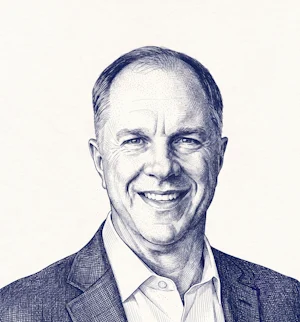
Dr. Michael Seals
Former Chief Digital Officer, Hussmann
Manufacturing and industrial services
Michael spent more than a decade leading technology and corporate strategy at a $1B+ global manufacturer, following fifteen years at Anheuser-Busch running IT across Europe, China, and Latin America. He has led acquisitions, divestitures, and the integrations that follow. His doctoral research examined what makes transformation hold.
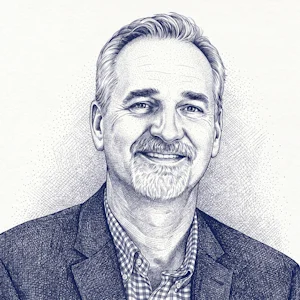
Martin Taylor
Former Chief Information Officer, ARCO Construction
Construction and multi-industry
Martin was the first executive technology leader at a $6B construction company, where he grew the team from ten to a hundred and moved a paper-heavy business to the cloud. Under his tenure the company ranked #80 on Forbes' 2023 list of the most cyber-secure companies in the US. Before that: Monsanto, Anheuser-Busch, GE.
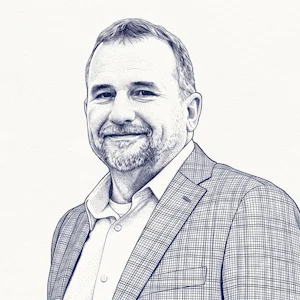
Scott Holtswarth
Former VP & Chief Information Officer, St. Luke's Hospital
Healthcare
Scott spent twenty-four years at a two-hospital health network, the last seven as CIO with a $25M budget and a team of a hundred. He deployed ambient AI that cut physician documentation time by 40%, kept payroll running through a vendor ransomware attack, and merged an acquired hospital onto a single platform.

Network
The Mary Sumner CIO Roundtable keeps everyone sharp
Our CIOs aren't isolated contractors. They're part of an active peer network—the Mary Sumner CIO Roundtable—where they share problems, debate solutions, and stay current on what's actually happening in mid-market technology. That network becomes your advantage.
- Peer learning and real-world problem solving
- Continuous exposure to industry trends and challenges
- Accountability to a community of peers, not a sales quota
Why senior talent chooses fractional work
After running IT at scale, most CIOs don't want another full-time role. They want variety, control over their time, and the chance to solve real problems without politics. Fractional work lets them do exactly that—pick engagements that matter, work with companies that respect their judgment, and stay sharp without the corporate noise.

Ready to talk strategy?
Schedule a technology assessment and see how this works.